━━ ͏͏͏͏͏͏͏͏͏͏͏͏ ͏͏͏͏͏͏ ͏͏͏͏͏͏͏͏͏͏͏͏ ͏͏͏͏͏͏ABOUT THE PROJECT
ZHENG
FAMILY
͏͏͏͏͏͏͏͏͏͏͏͏ ͏͏͏͏͏͏
Uphold Trust, Preserve Balance, Through All Generations
͏͏͏͏͏͏͏͏͏͏͏͏ ͏͏͏͏͏͏
͏͏͏͏͏͏͏͏͏͏͏͏ ͏͏͏͏͏͏
━━ ͏͏͏͏͏͏͏͏͏͏͏͏ ͏͏͏͏͏͏ ͏͏͏͏͏͏͏͏͏͏͏͏ ͏͏͏͏͏͏RULES TO UPHOLD
Term and
Condition
All characters, family lineages, organizations, documents, currency/cheques, seals, and events depicted within this project are works of creative fiction and roleplay. Any resemblance to real persons (living or deceased), actual institutions, or real-world historical and legal events is entirely coincidental. Nothing published under this project constitutes real financial, legal, or factual representation.
Actions, beliefs, conflicts, and statements made by characters belong strictly to the narrative universe and do not reflect the personal views, values, or real-life behavior of the creator(s) or participants.
Edited portraits, graphic designs, custom seals, and visual props are created solely for non-commercial storytelling and world-building aesthetics.
Original storylines, character biographies, world-building lore, custom typography/seals, and graphic layouts remain the creative property of the project creator(s).
If real-life photographs or faceclaims are used as visual references, no claim of ownership or endorsement by the depicted individuals is implied. All edited media carries a fictional/roleplay disclaimer and must not be reposted out of context as real-world media.
Do not copy, trace, redistribute, or claim original lore, character profiles, or custom visual props as your own without explicit permission.
The project creator(s) reserve the right to update these terms, adjust canon continuity, or remove disruptive participants/comments at any time to preserve the integrity of the creative space.
͏͏͏͏͏͏ ͏͏͏͏͏͏͏͏͏͏͏͏ ͏͏͏͏͏͏ ͏͏͏͏͏͏ ͏͏͏͏͏͏͏͏͏͏͏͏ ͏͏͏͏͏͏
͏͏͏͏͏͏ ͏͏͏͏͏͏͏͏͏͏͏͏ ͏͏͏͏͏͏
Out of Character
Agrement
By joining this collaborative roleplay and creative writing project, each participating writer agrees to the following commitments to maintain story quality, continuity, and a supportive creative environment
Writers commit to posting, replies or lore updates within the agreed-upon timeframe (e.g., within 5–14 days for active scenes, unless otherwise arranged).
Real life comes first. If you anticipate delays, writer's block, or a hiatus, notify the base in advance so storylines can be paused, adjusted, or temporarily bridged without stalling the whole members.
Any heavy, mature, or potentially triggering themes must be discussed OOC beforehand, with clear opt-out boundaries respected by all participants.
You retain creative ownership of original characters you create from scratch. However, if you leave the project, shared plotlines, family ties, or co-developed lore tied to the main universe may be gently written out or concluded by the project lead to preserve story continuity.
Writers agree to maintain respectful, drama-free OOC communication. Chronic ghosting without notice, boundary violations, or disruptive conduct may result in character removal from active storylines at the project base's discretion.
͏͏͏͏͏͏͏͏͏͏͏͏ ͏͏͏͏͏͏
͏͏͏͏͏͏͏͏͏͏͏͏ ͏͏͏͏͏͏
ZHENG FAMILY
The Member
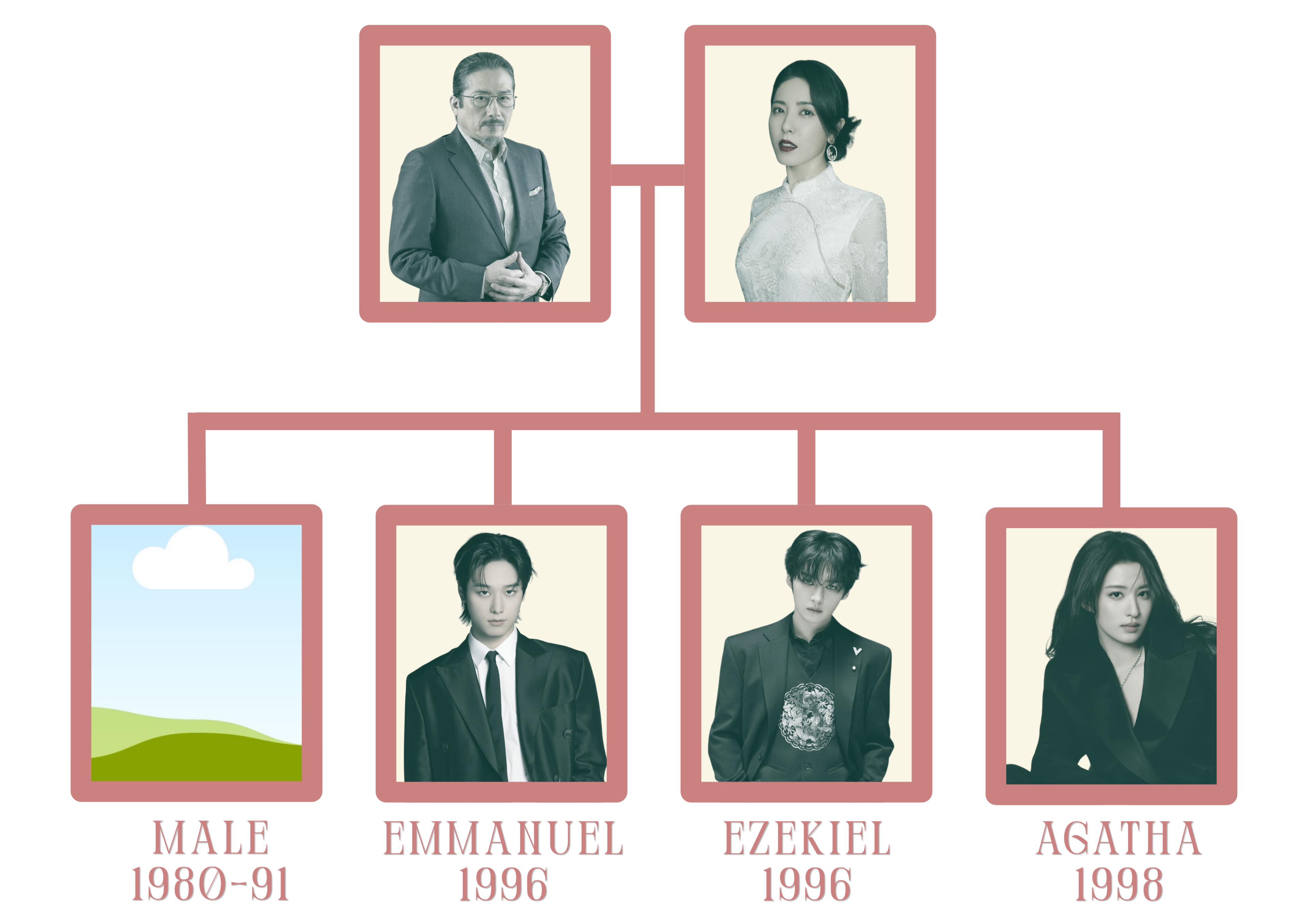
FIRST PILLAR
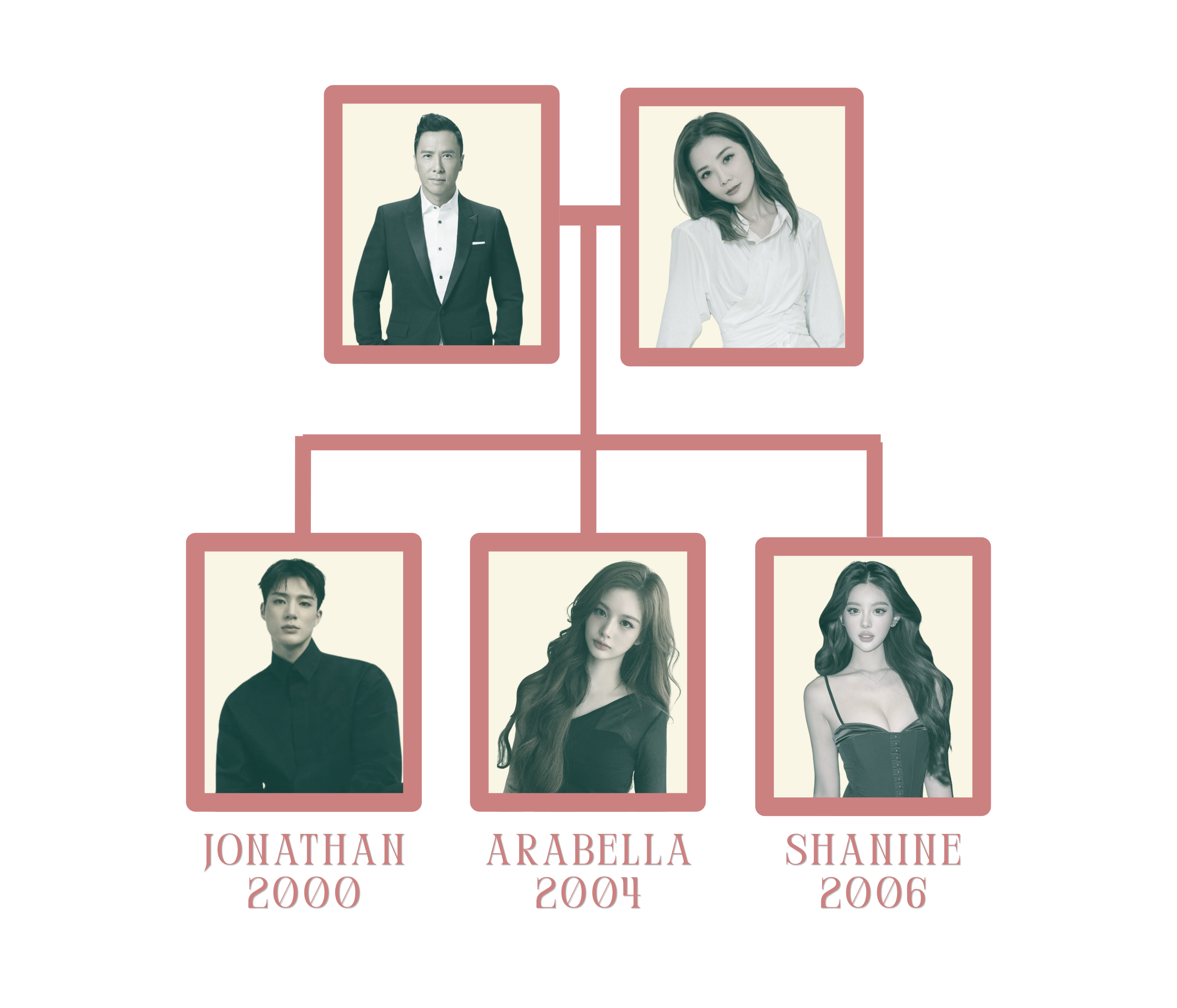
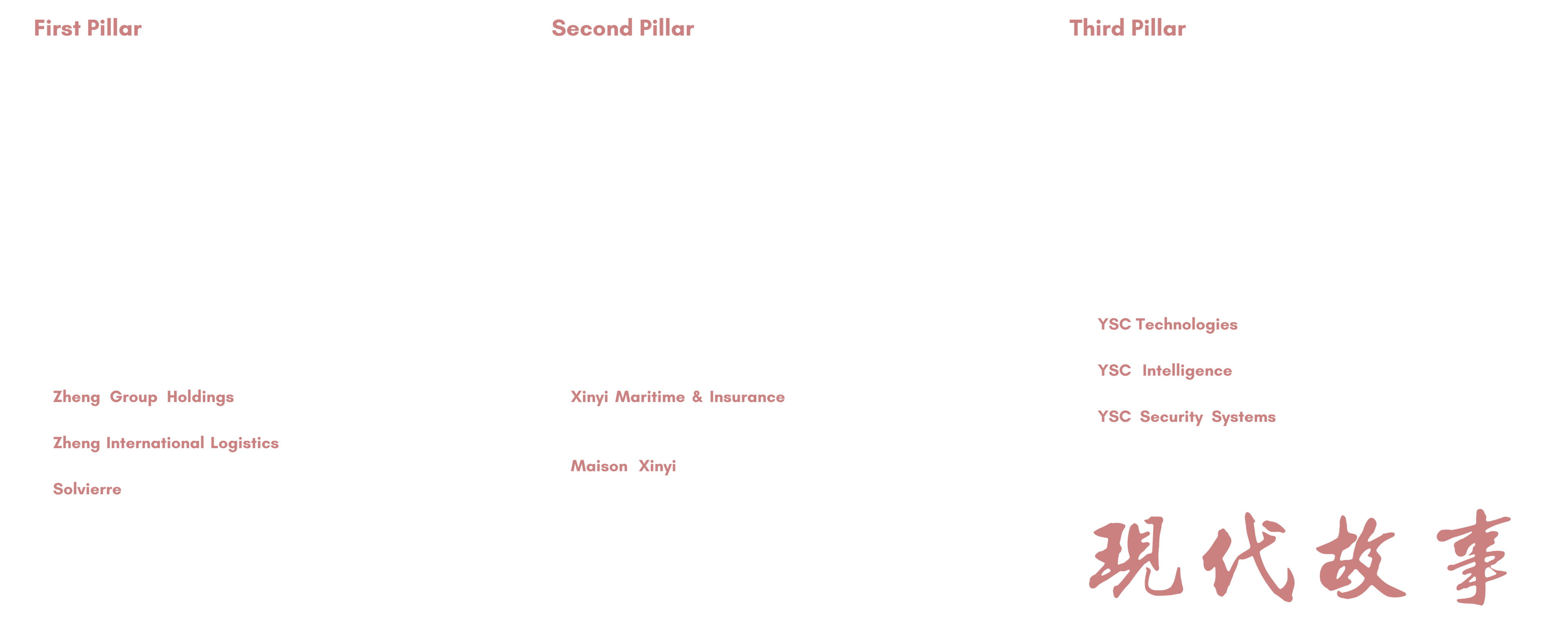
Weijie, as the eldest son, leads the Zheng Group, transforming it into a diversified international holding company with interests in hospitality, real estate, investment management, logistics, and trade.
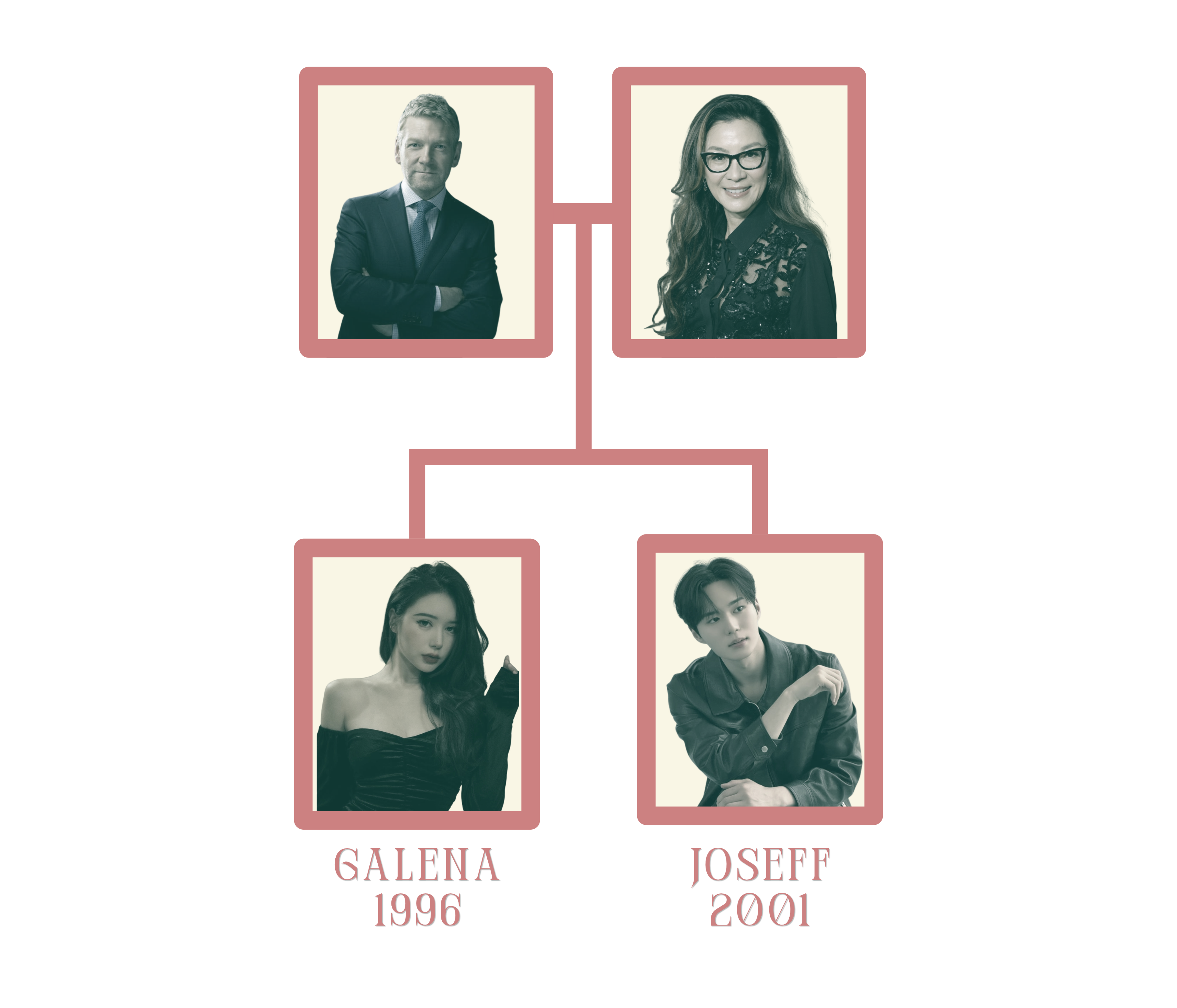
SECOND PILLAR
Xinyi took a different route than her brother, marrying a European businessman and creating her own commercial network beyond Shanghai, linking Europe and East Asia.
THIRD PILLAR
Yuxuan carved his own path, focusing on technology and digital infrastructure rather than inheriting the family empire. He founded the Yuxuan Strategic Consortium, specializing in cybersecurity, tech investment, corporate intelligence, and security infrastructure.
━━ ͏͏͏͏͏͏͏͏͏͏͏͏ ͏͏͏͏͏͏ ͏͏͏͏͏͏͏͏͏͏͏͏ ͏͏͏͏͏͏Storyline
The Founding Generation (1657–1842)
The history of the Zheng family began in 1657, when Zheng Wenxuan established a merchant house in Shanghai during the turbulent transition from the Ming dynasty to the Qing. His business dealt in silk, tea, porcelain, medicinal goods, and river transportation, gradually earning a reputation for reliability among merchants whose fortunes depended on unstable political and commercial relationships. Wenxuan understood that wealth alone could not protect a family through changing dynasties, so he built his influence through contracts, discretion, and the careful preservation of obligations.His principles shaped the family's identity, although they did not prevent conflict within his own household. His younger brother, Zheng Wenliang, secretly diverted a shipment intended for political allies, believing that the family should support the remnants of the Ming loyalist movement. Wenxuan concealed his brother's involvement to protect the household from outside retaliation, but removed him from the family accounts and denied him authority over the ancestral seal.Their disagreement established a tradition that would follow the Zhengs for centuries: Family members could be protected from external enemies, but betrayal would never be forgiven simply because it was committed by blood.As the family expanded, Wenxuan established the House of Nine Courtyards, an ancestral estate that served as the family's residence, commercial headquarters, and meeting place for influential associates. His descendants inherited not only its wealth but also the responsibility of maintaining the relationships that sustained it. By the early eighteenth century, disputes over inheritance forced the family to adopt a succession system in which leadership required the approval of senior representatives rather than following birth order alone. The Council of Nine eventually emerged from this arrangement, giving the principal branches of the family a formal role in its governance.Throughout the eighteenth and early nineteenth centuries, the Zhengs expanded into lending, property, warehousing, and international commerce. They also began preserving correspondence, contracts, and records of unpaid obligations in a private archive known as the Black Ledger. What began as a practical record of commercial dealings gradually became one of the family's most valuable possessions, containing evidence of broken agreements and relationships that could influence powerful individuals.The opening of Shanghai to foreign trade after the First Opium War in 1842 challenged the family's traditional methods. Some members believed the Zhengs should preserve their Chinese commercial identity, while others argued that survival required embracing international finance and foreign partnerships. The disagreement created the first major division within the family, preparing the ground for a rivalry that would define its next era.
━━ ͏͏͏͏͏͏͏͏͏͏͏͏ ͏͏͏͏͏͏ ͏͏͏͏͏͏͏͏͏͏͏͏ ͏͏͏͏͏͏Storyline
The Expansion Generation (1843–1911)
During the second half of the nineteenth century, Shanghai developed into an increasingly important commercial center shaped by Chinese authorities, foreign concessions, international merchants, and competing political interests. The Zheng family adapted to this changing environment by expanding its business relationships while preserving its independence from any single political power. Its success brought considerable wealth, but it also intensified the rivalry between two branches descended from Zheng Zhaowei and Zheng Zhaoyan.Zhaowei believed the family should modernize without surrendering its traditions, whereas Zhaoyan considered international expansion essential to the dynasty's survival. Their descendants continued the disagreement, competing over commercial interests, inherited authority, and control of the Black Ledger. Neither branch was willing to surrender its influence, and their attempts to undermine one another eventually threatened the stability of the entire household.The Taiping Rebellion and the upheavals surrounding Shanghai placed additional pressure on the family. Both branches contributed to preserving its commercial interests, yet each later claimed that its decisions had saved the dynasty. Their rivalry ended in a reluctant settlement that allowed them to manage separate enterprises while sharing the ancestral estate and central family archive. Although the agreement prevented an immediate collapse, it did little to restore trust.By the end of the nineteenth century, the Zhengs had developed a sophisticated network of commercial relationships and private obligations. Their public reputation rested on discretion and financial reliability, while their internal influence increasingly depended on the information preserved within the Black Ledger. The family learned that a well-documented promise could be more valuable than a fortune, particularly when the people involved held positions of considerable influence.When the Qing dynasty fell in 1911, the Zhengs did not attempt to restore the old imperial order. Instead, they repositioned themselves for the emerging republican era, recognizing that their future depended on adapting to political change rather than defending a vanished system. The family entered the twentieth century wealthy, influential, and deeply divided, with each branch convinced that it understood the true purpose of House Zheng better than the other.
━━ ͏͏͏͏͏͏͏͏͏͏͏͏ ͏͏͏͏͏͏ ͏͏͏͏͏͏͏͏͏͏͏͏ ͏͏͏͏͏͏Storyline
The Covenant Generation (1912–1978)
The Republican era transformed Shanghai into a city of extraordinary commercial opportunity and political uncertainty, where legitimate enterprises, criminal networks, and competing authorities frequently operated in overlapping spheres. Under Zheng Weiming, the family reorganized its affairs, separating its public businesses from its private intelligence and security institutions. His sister, Zheng Yulan, established the Black Chamber, which preserved sensitive records, investigated internal misconduct, and helped the family navigate a world in which information could determine the survival of an entire organization. The family's greatest internal crisis came in 1927, when Zheng Haoran secretly entered an agreement with a rival organization without the knowledge or consent of the Council of Nine.The arrangement was intended to strengthen his claim to leadership, but it exposed the family's commercial partners to danger and resulted in devastating losses. Weiming removed Haoran from the family hierarchy, and Haoran disappeared before his punishment could be formally carried out. His fate remained unknown, while the circumstances surrounding the betrayal became one of the family's most closely guarded mysteries.War subsequently shattered the world in which the Zhengs had built their influence. The Battle of Shanghai in 1937, the Japanese occupation, and the political transformation of China in 1949 forced the family to disperse its members, records, and commercial interests. Zheng Jianhua remained committed to the ancestral seat in Shanghai, while his brother, Zheng Jianming, established an overseas network intended to preserve the dynasty beyond the reach of political upheaval. Their disagreement divided the family into the Shanghai House and the Exile House, each claiming responsibility for its survival.The conflict might have destroyed the Zhengs had it not been for an event that changed their position within the international underworld. The High Table had emerged nearly three centuries earlier, when wars among trading cartels, European mafia families, and illicit commercial networks threatened to destabilize the wider underworld. Its founders recognized that unrestricted conflict would eventually destroy the organizations that depended on it, so they established a secret council to maintain balance through shared laws, recognized boundaries, and negotiated settlements.The High Table did not conduct criminal operations itself; its authority rested on the willingness of its members to recognize the rules that prevented their rivalries from becoming endless wars. In 1951, a succession crisis involving the Eleventh House threatened to divide the High Table. The disappearance of its heir produced competing claims and accusations among powerful factions, while the existing members struggled to agree on a settlement. Zheng Jianming offered to reconstruct the events, verify the conflicting accounts, and help the parties reach an agreement without allowing the dispute to escalate into a wider conflict. His work became known as the Winter of Twelve Letters, a diplomatic effort that restored the missing heir and established a mutually accepted settlement.
━━ ͏͏͏͏͏͏͏͏͏͏͏͏ ͏͏͏͏͏͏Curent ͏͏͏͏͏͏͏͏͏͏͏͏ ͏͏͏͏͏͏Storyline
The Covenant Generation (1912–1978)
The modern history of House Zheng is defined by three siblings who inherited different responsibilities within the same dynasty. Although they share the same bloodline and ancestral inheritance, each has developed an independent sphere of influence, allowing the Zheng family to expand beyond its traditional commercial foundations. The eldest son, Zheng Weijie, inherited the principal family empire and the responsibility of representing the Twelfth Seat of the High Table. His younger sister, Zheng Xinyi, established an independent international business network through her marriage and commercial interests abroad. The youngest, Zheng Yuxuan, developed another pillar of the family through investments in technology, security infrastructure, and private intelligence. Together, they form the three principal pillars of the modern Zheng dynasty.
CURRENT TIMELINE

TRIBUNE
Rp 977.000
Non-Numbered Seating(s); pada saat pertunjukan/ pagelaran, para pengunjung di kategori ini dibebaskan untuk memilih Seat(s) terbaik untuk menyaksikan pertunjukan. Tempat duduk di kategori ini tidak akan diberi penomoran.
MEET OUR TEAM
Staff In Charge
![Master of Ceremony]()
Master of Ceremony
![Ticketing]()
Ticketing
![Runer]()
Runer
![Public Relations]()
Public Relations




![Seventeen]()
Seventeen
![Wanna One]()
Wanna One
![Stray Kids]()
Stray Kids
![ATEEZ]()
ATEEZ
![SOL.4CE]()
SOL.4CE





HURRY UP! GRAB YOUR TICKET NOW!
| 27 - 28 May 2024 | MUSEUM OF ART |
| 10:00 - 24:00 | Aero Street Number 20th. |
